The Complete At-Home Dog Grooming Checklist
By Mysunnypet Team · Published
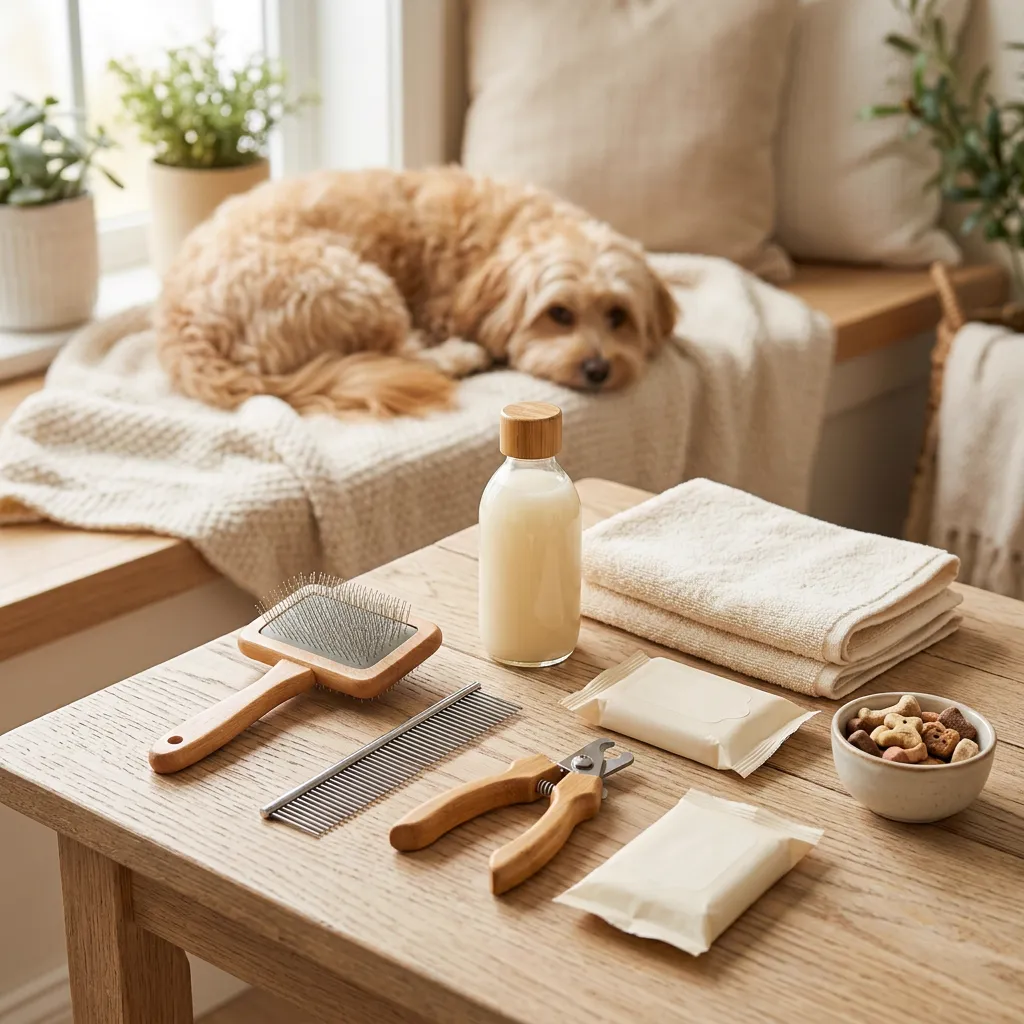
The right tools make home grooming easier
You do not need every grooming product on the market. A useful at-home kit should match your dog’s coat, skin, age and comfort level.
Some tasks are easy to maintain between professional appointments, such as brushing, paw checks and gentle cleaning. Other tasks, including severe mat removal, complicated haircuts and difficult nail trims, may be safer with a professional groomer.
Use this checklist to build a simple routine for your pet.
1. Choose the right brush for your dog’s coat
The best brush is not the one with the most features. It is the one that safely reaches the coat, removes the right type of loose hair and feels comfortable for your dog.
Short, smooth coats
A soft bristle brush or rubber grooming brush can help remove loose hair and distribute natural oils. Weekly brushing may be enough for many short-coated dogs, although active dogs and heavy shedders may need more.
Medium and long coats
A slicker brush, pin brush or metal comb may help separate the coat and identify tangles. Pay close attention behind the ears, under the front legs, around the collar and near the tail.
Double coats
An undercoat tool may help during shedding seasons, but it should be used carefully. Avoid aggressive or excessive brushing that can irritate the skin or damage the outer coat.
Curly coats
Curly coats often require regular brushing and combing to prevent mats. A professional groomer can show you how to work through the coat without pulling the skin.
One tool can cover a lot of this ground. The 3-in-1 Electric Pet Steam Brush brushes, lifts loose undercoat and adds a light steam massage, which makes it a reasonable single purchase for short to medium coats. Dogs with heavy double coats or tight curls will still need a dedicated undercoat rake or metal comb alongside it.
2. Use a dog-safe shampoo
Choose a shampoo formulated specifically for dogs. The product should suit your pet’s coat and any known skin sensitivities.
A basic bath kit may include:
- Dog shampoo.
- A non-slip bath mat.
- Absorbent towels.
- A gentle rinse cup or handheld sprayer.
- A brush appropriate for the coat.
- A safe, cool drying method.
Brush out loose tangles before the bath. Water can tighten mats and make them more difficult to remove.
Avoid getting shampoo in the eyes and rinse thoroughly. Keep water and products away from the ear canal. After bathing, dry the coat completely, especially if your dog has a dense or double coat.
If your dog has recurring itching, redness, sores, a strong odor or unusual hair loss, ask a veterinarian for advice before changing shampoos.
Shampoo is one item worth buying where you can read the label and compare formulas in person, especially if your dog has sensitive skin. If you are unsure which to use, ask at your next grooming appointment — we see what your dog's skin and coat actually need during the session.
3. Keep nails at a safe length
Your dog’s nails should be checked regularly. Nails that click on hard floors, snag on fabric or curl toward the paw may need attention.
A home nail-care kit may include:
- Dog nail clippers or a nail grinder.
- Styptic powder or another veterinarian-approved bleeding-control product.
- Treats for positive reinforcement.
- A non-slip surface.
- A calm, well-lit place to work.
Introduce nail tools slowly. Let your dog see and smell the tool before using it. Touch one paw briefly, reward calm behavior and stop before your pet becomes overwhelmed.
Never rush through dark nails if you cannot see where the quick begins. If your dog is fearful, struggles intensely or has previously been injured during nail trimming, ask a professional groomer or veterinarian for help.
Safety note:
If you accidentally cut the quick and bleeding does not stop after a few minutes of gentle pressure and appropriate first aid, contact your veterinarian.
4. Check and clean the paws
Paws collect dirt, salt, grass and small pieces of debris. Inspect the pads after outdoor walks, especially during extreme weather.
Keep these items available:
- A soft towel.
- Pet-safe paw wipes.
- A small container for rinsing muddy paws.
- Paw balm only when appropriate for your pet and recommended by a professional.
- A blunt-tip tool for removing visible surface debris, used carefully.
Do not pull at deeply embedded objects or ignore swelling, bleeding, cracks or persistent licking. These signs may require veterinary attention.
Most of this is kitchen-cupboard stuff: a clean towel, lukewarm water and patience. You do not need a specialty product for routine paw cleaning, and a daily check costs nothing.
5. Handle ears carefully
Regularly look at the outer ear and notice changes in odor, redness, discharge or sensitivity. Use only products intended for pets and follow the product directions.
Do not insert cotton swabs or small objects into the ear canal. Deep cleaning can push debris farther inside or cause injury. If your dog repeatedly shakes the head, scratches the ear or reacts painfully to touch, contact a veterinarian.
This is an area where “more cleaning” is not always better. The goal is gentle observation and appropriate care.
6. Do not forget dental care
Dental care is part of overall grooming. A pet toothbrush and dog-safe toothpaste can help support a home routine when introduced gradually.
Never use human toothpaste unless a veterinarian specifically confirms that it is safe. Many human products contain ingredients that are not appropriate for dogs.
Start with a small amount of dog toothpaste on your finger or a pet toothbrush. Reward your dog for calm participation and build the routine gradually.
7. Make grooming easier with rewards and routine
A grooming kit is only useful if your pet can tolerate the process. Keep sessions short in the beginning and reward calm behavior.
A simple routine may look like this:
- Choose a quiet, non-slip space.
- Let your dog sniff the tools.
- Begin with an easy area, such as the shoulder or back.
- Use gentle, slow movements.
- Offer a reward before your dog becomes stressed.
- Stop and try again another day if your dog becomes uncomfortable.
Do not chase your dog with the brush or hold them down for a difficult procedure. A negative experience can make future grooming harder.
What should be left to a professional groomer?
At-home maintenance is valuable, but some situations require professional support. Book a grooming appointment when your dog has:
- Severe or tight mats.
- A coat that needs a breed-specific haircut.
- Strong resistance to nail trimming.
- A history of fear or aggression during grooming.
- A senior body that becomes tired or painful when standing.
- A coat that is difficult to dry safely.
- Skin changes that need veterinary evaluation.
At MySunnyPet, pet parents can choose Home Pet Spa, Pick-up & Drop-off or In-Home Grooming depending on the pet’s needs and the family’s schedule.
Build the kit, and know when to stop. A good routine at home stretches the time between appointments. It does not replace them — and knowing which tasks to hand over is part of taking care of your dog.
Shop Grooming Tools·Request an Appointment·Explore In-Home Grooming
Build your shopping list
Basic kit for most dogs
- Coat-appropriate brush.
- Metal comb if needed for the coat.
- Dog-safe shampoo.
- Towels.
- Pet-safe paw wipes.
- Dog toothbrush and toothpaste.
- Nail clippers or grinder.
- High-value treats.
Add-ons for specific needs
- De-shedding tool for heavy seasonal shedding.
- Detangling spray for appropriate coats.
- Sensitive-skin shampoo recommended by a professional.
- Extra towels for long or dense coats.
- A non-slip mat for bath and nail-care sessions.
Frequently asked questions
Can I use human shampoo on my dog?
It is better to use shampoo formulated for dogs. If your pet has skin problems or allergies, ask your veterinarian which product is appropriate.
What is the best brush for a dog?
The best brush depends on the dog’s coat type, length, density and condition. A professional groomer can help identify the correct tool.
Should I cut mats at home?
Tight mats can pull the skin and hide irritation. Avoid cutting close to the skin unless you have been properly trained. A professional groomer can assess and remove difficult mats more safely.
How often should I groom my dog?
Many dogs benefit from professional grooming every 4 to 8 weeks, but the correct interval depends on the coat, haircut, lifestyle and skin condition. Read our complete grooming schedule guide.
A good grooming kit supports, but does not replace, professional care
The right products help you maintain your dog’s comfort between appointments. Choose tools based on your pet’s real needs, introduce them slowly and stop when your dog shows distress.
When grooming becomes difficult, painful or unsafe, professional support is the best next step.